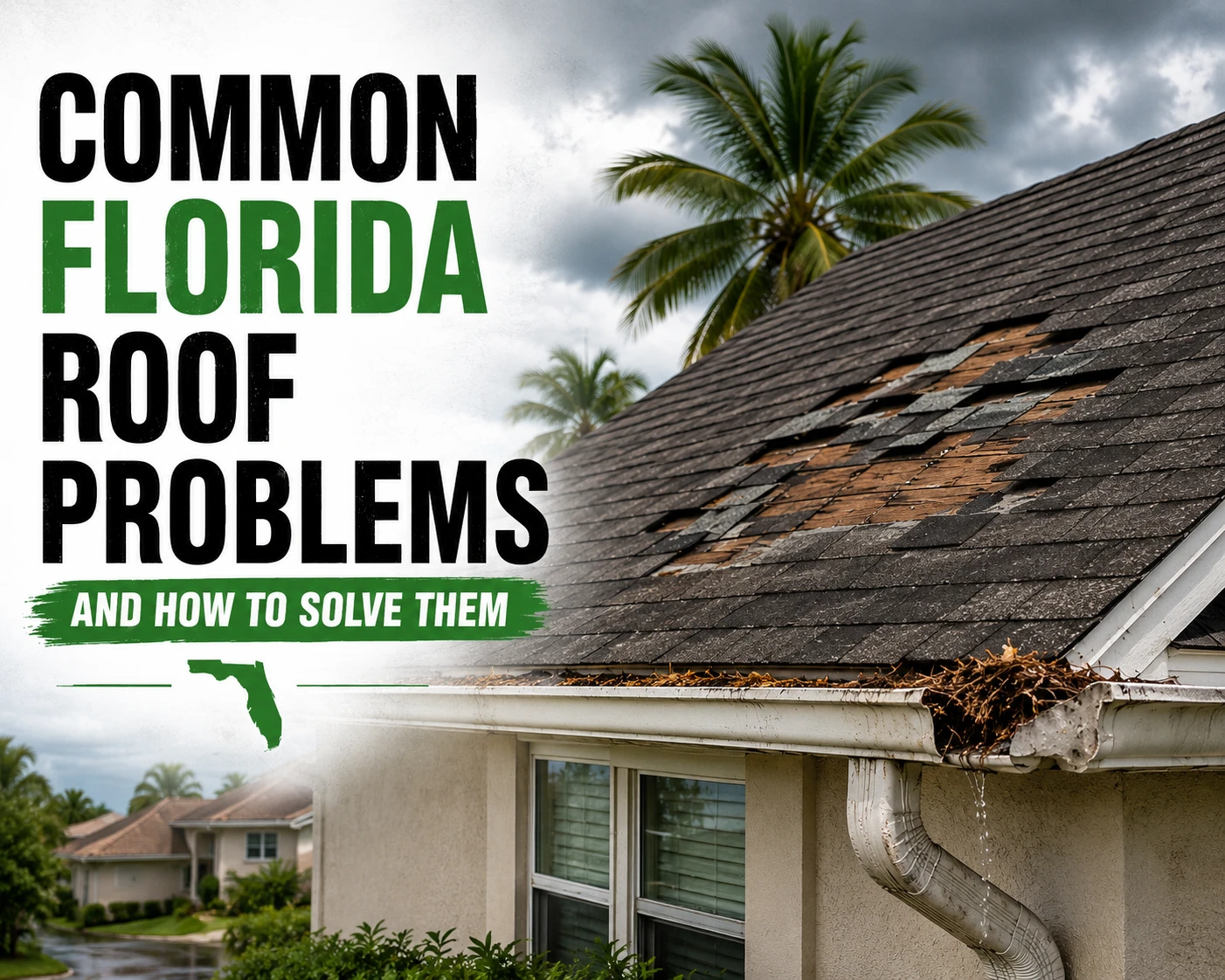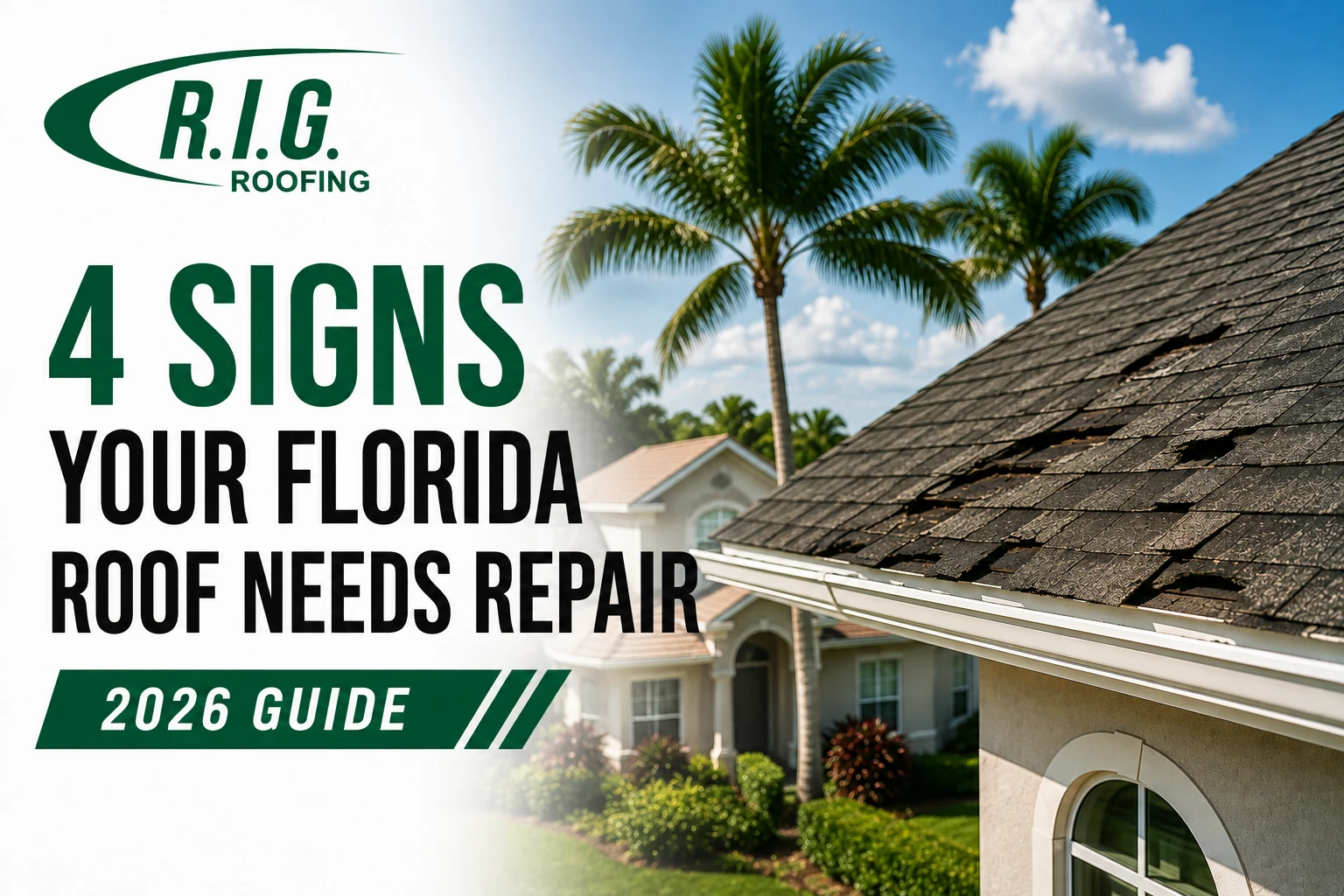
Florida homeowners know hurricanes can leave behind overwhelming roof damage. High winds, flying debris, and heavy rainfall can compromise your roofing system in just minutes. If you suspect roof damage after a storm, acting quickly is essential. The following guide on emergency roof repairs outlines exactly what to do to keep your home safe and limit costly repairs.
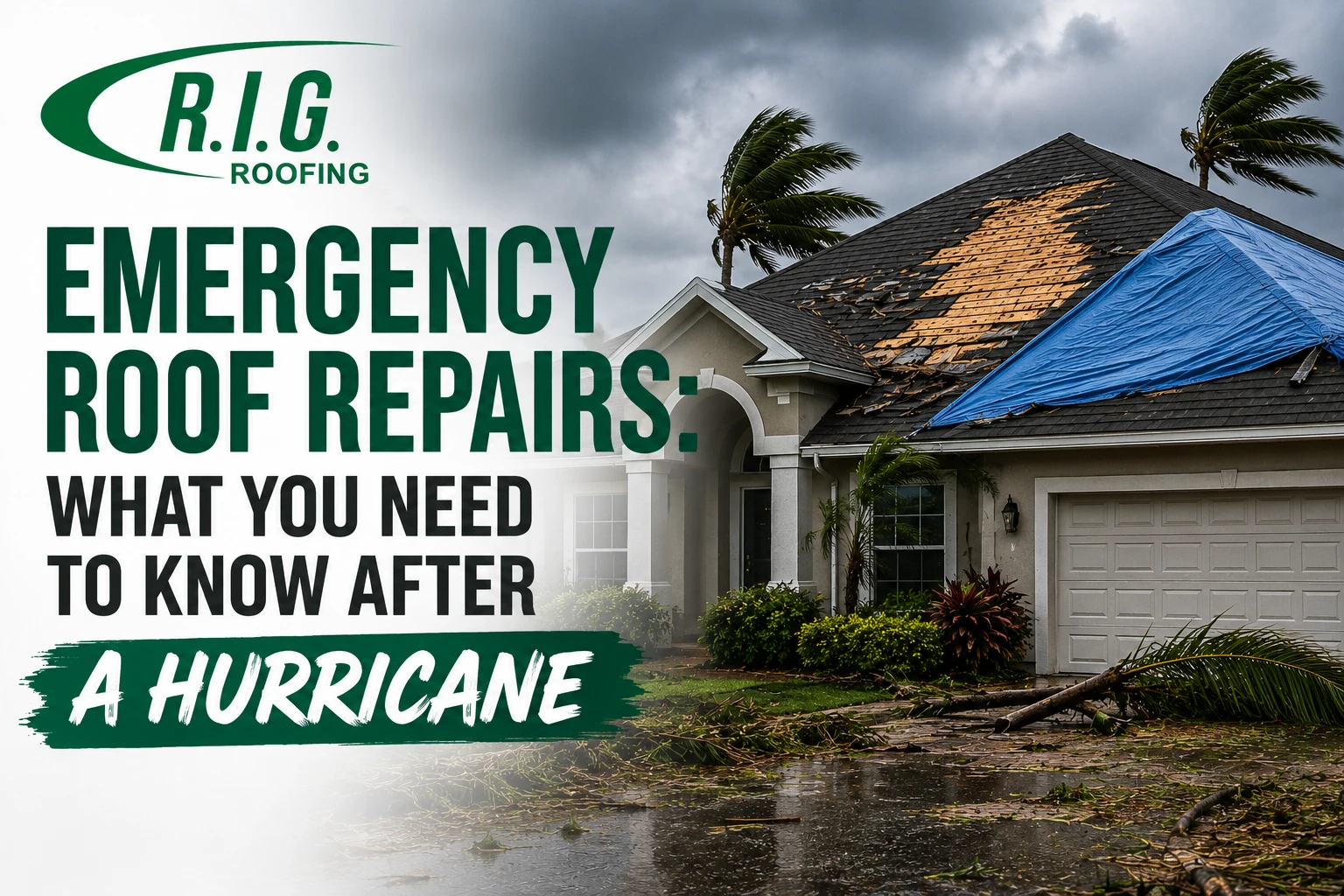
Roof Repair Emergencies: What You Need To Know After A Hurricane, or major weather event.
1. Document Roof Damage Immediately
Before you clean up or move anything, take photos and videos of the damage.
- Missing or lifted shingles
- Visible holes or punctures
- Water damage to ceiling / walls
- Damaged gutters, vents, or flashing
- Fallen branches or debris on the roof
Having documentation helps your insurance company verify the cause and extent of the damage, speeding up the processing of your claim.
2. Protect Exposed Areas Of Your Roof To Prevent Further Damage
If your roof is leaking, or is missing a considerable amount of roofing materials, take the steps needed to prevent more damage.
How to protect your roof quickly after a hurricane or major storm:
- Cover exposed areas with roofing tarps
- Move belongings away from leaks
- Place buckets to catch dripping water
- Lay plastic sheeting over furniture if you are unable to stop water from coming inside
Why it matters: Secondary damage-like mold, saturated insulation, or structural decay-can develop quickly. If your insurance company suspects neglect, your claim may be reduced.
3. Contact Your Home Insurance Company ASAP
After documenting the damage, notify your insurance provider and start a claim.
Be prepared to provide documented evidence
- Photos or videos
- Show areas affected inside and outside
- Provide the date & time the damage occurred
- List temporary or preventative measures you've taken to protect your home
Faster reporting, with documentation, typically leads to faster inspections, approvals, and repairs.
4. Call a Licensed Roofing Contractor You Can Trust for Emergency Roof Repairs
Storm damage isn't always obvious, and it can be dangerous to inspect your roof after a hurricane or large storm. A licensed roofing professional can safely identify:
- Hidden structural damage
- Trapped moisture
- Damaged decking
- The need for emergency dry-in protection
R.I.G. Roofing provides:
- Emergency response as soon as it is safe for our employees to be on the road after a storm
- Emergency Dry In services
- Honest assessments
- Assistance navigating insurance claims
- A promise to never sell you a roof you don't need
5. When It Comes To Your Roof, Fast Action Matters After A Storm
Waiting too long after roof damage increases the risk of:
- Mold and mildew growth
- Wood rot
- Electrical hazards
- Damaged insulation
- Worsening leaks
- Insurance delays or denials
Even if the damage seems minor, the safest choice is always to get a professional assessment immediately.
Download Your Emergency Roof Repair Checklist
R.I.G. Roofing: Trusted Emergency Roof Repairs After The Storm
If your roof has storm damage, don't wait. R.I.G. Roofing has been protecting central Florida homeowners with reliable roofing service since 2005.