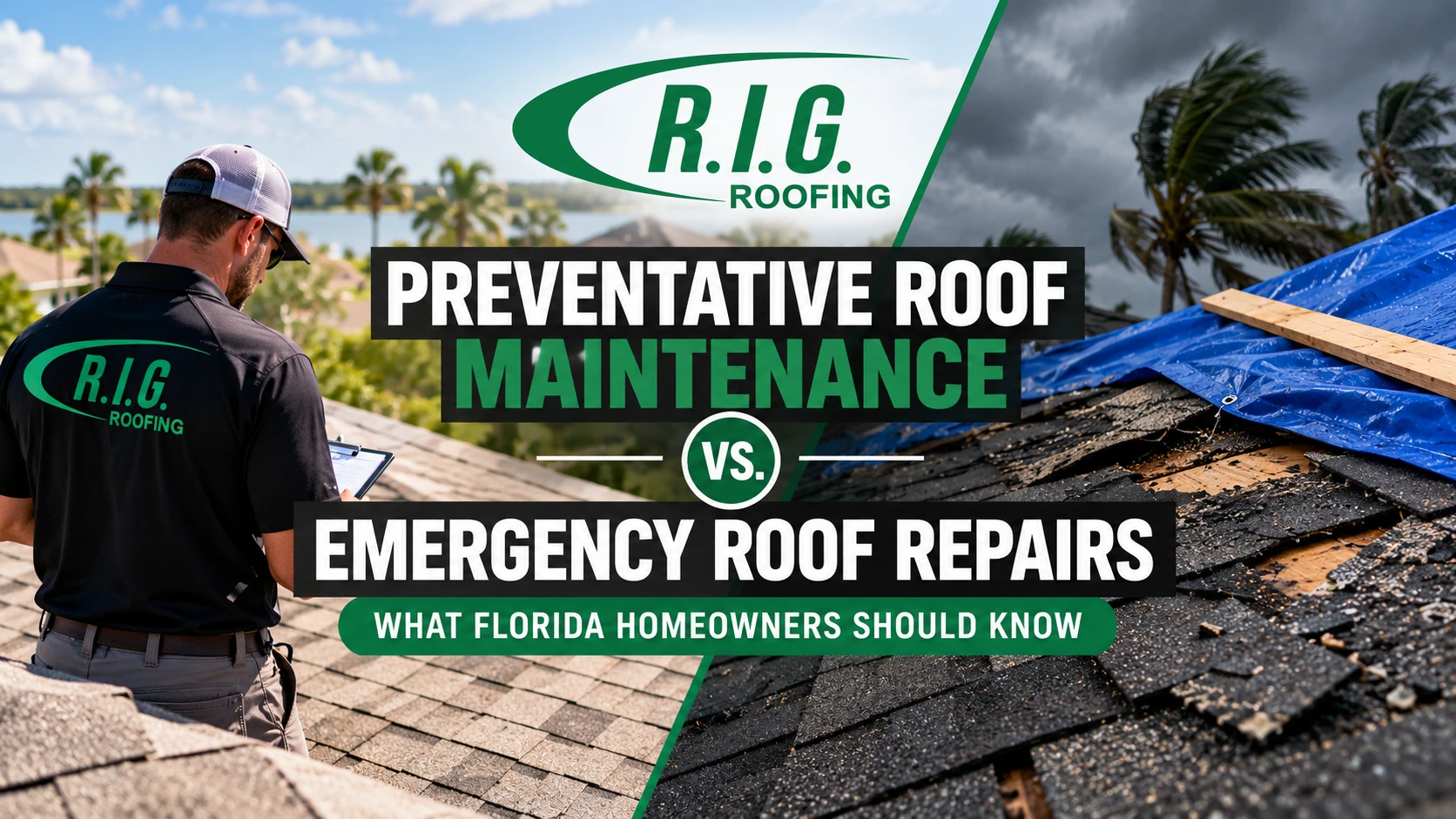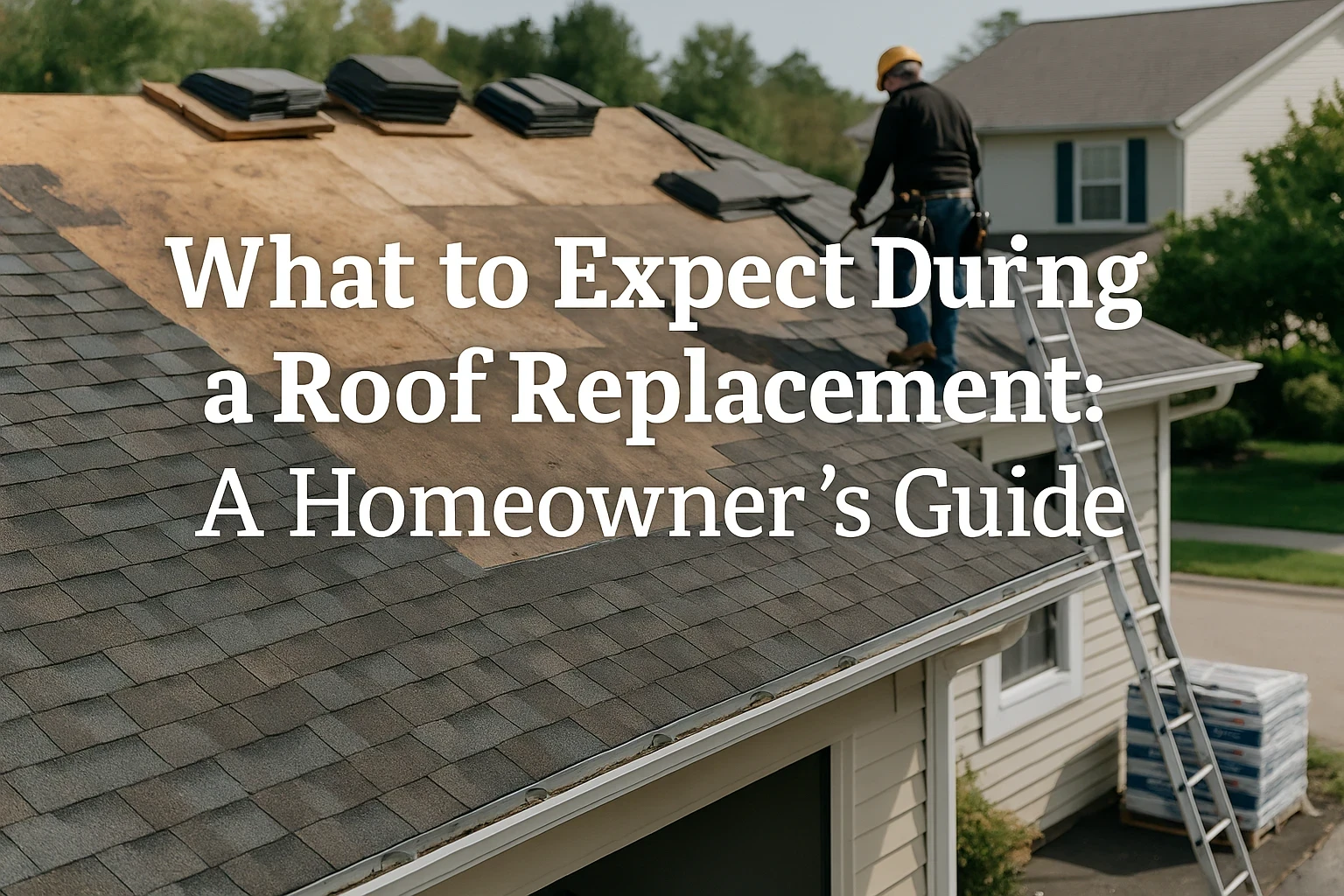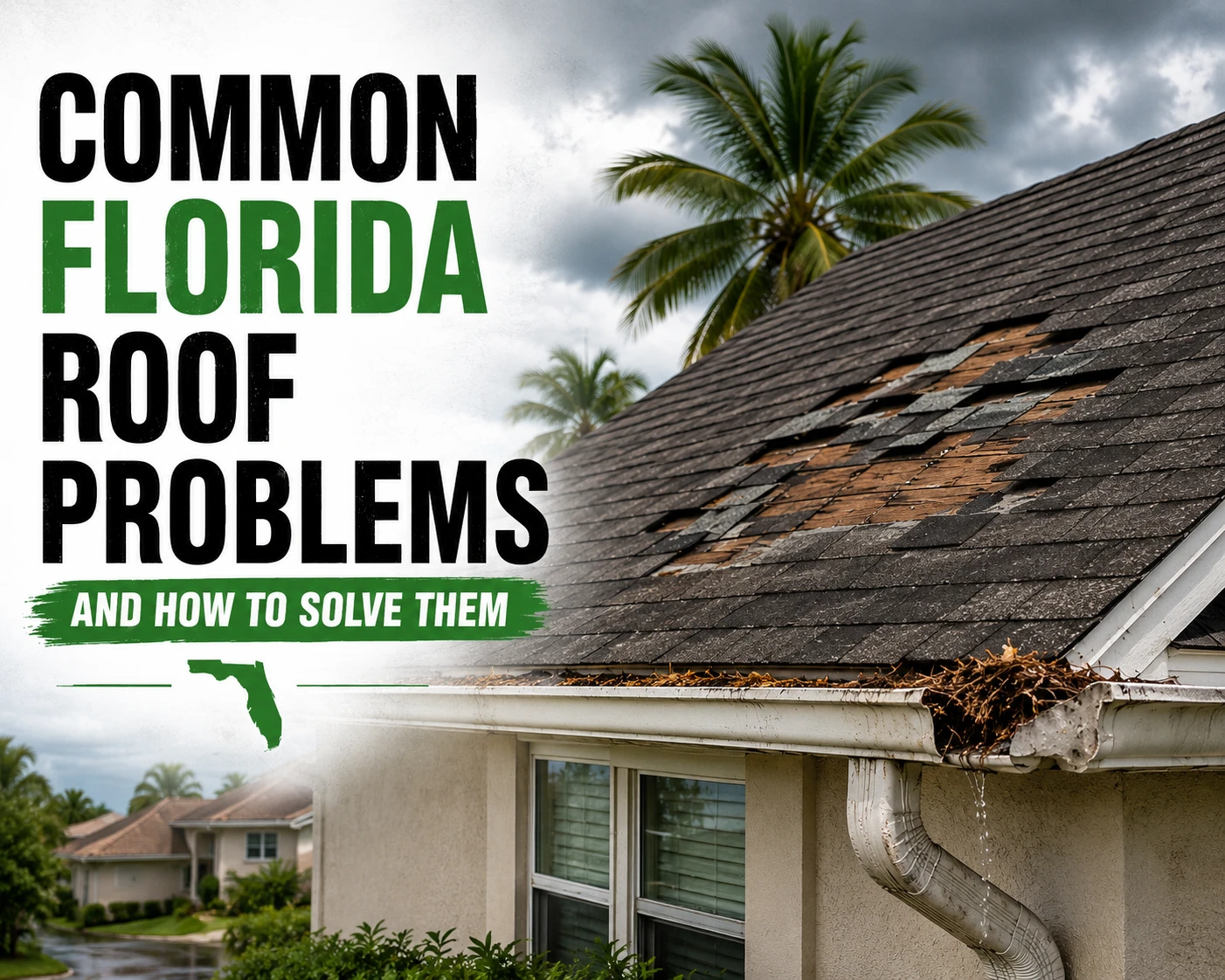
The four most common signs your roof needs repair are:
Visible damage like missing or cracked shingles, tiles, or metal panels Interior water stains on ceilings, walls, or in the attic Suddenly rising energy bills Shingle granules collecting in gutters or near downspouts.
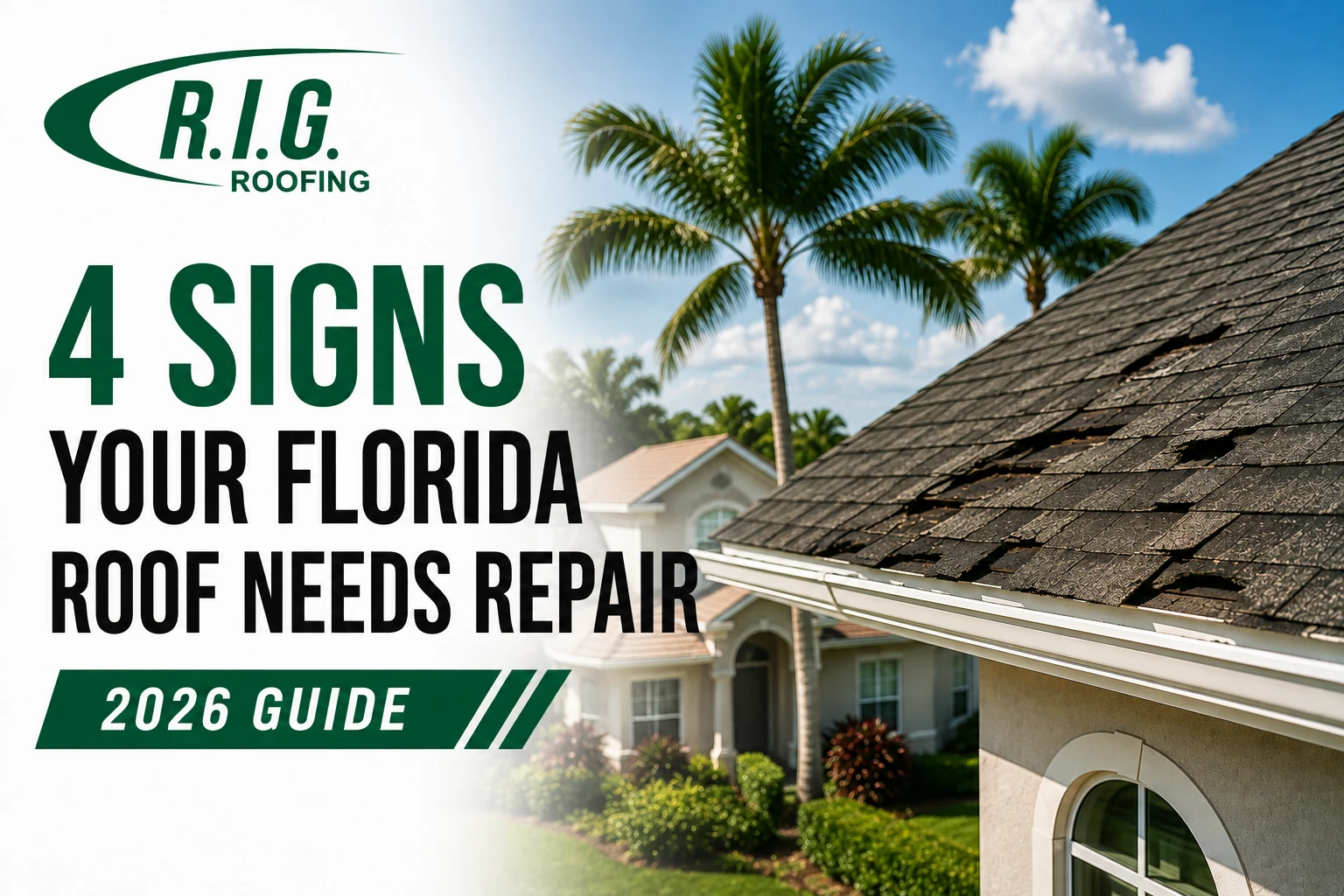
In Florida's climate, intense UV, daily rain, humidity, and hurricane-season winds, these warning signs appear faster than in most states and often within 8 to 12 years of installation. Catch any of them early and you can usually repair instead of replace.
Quick comparison: the 4 warning signs at a glance
Use this table as a quick reference. If any row describes what you're seeing on your home right now, the corresponding section below explains what to do next.
| # | Warning Sign | What to Look For | Why It Matters | Urgency |
|---|---|---|---|---|
| 1 | Visible roof damage | Cracked or missing shingles, tiles, or panels; sagging; wavy areas | Underlayment & decking exposed → rapid leak progression | High |
| 2 | Interior water stains | Brown rings on ceilings or walls; staining around vents, skylights, attic | Protective barrier compromised; mold and rot risk within 30 days | High |
| 3 | Rising energy bills | 15%+ cooling-cost spike with no rate change | Ventilation failure or insulation gap; AC compensating | Medium |
| 4 | Granules in gutters | Black, sand-like grit; shingle chunks; erosion near downspouts | Aging shingles; less likely to protect your home during a major weather event | Medium |
📞 Spot one or more of these on your home? R.I.G. Roofing offers free, no-obligation roof assessments throughout Central Florida. Call (863) 294-4477 book online.
What does visible roof damage look like?
Visible damage is the most obvious sign your roof needs repair, and the easiest to spot from the ground using binoculars. After Florida storms, walk the perimeter of your home and look up.
How to spot roof damage:
- Cracked, curled, or missing shingles, especially common after hurricane-season wind gusts
- Cracked or slipped tiles on tile roofs
- Loose, dented, or detached panels on metal roofs
- Sagging or wavy areas visible from the street, often indicates decking damage underneath
Why catching roof damage early is important
Damaged roofing materials expose the underlayment and decking. Once exposed, Florida's daily rain and humidity drive moisture into the structure within days, not weeks. According to the Florida Building Code wind-uplift requirements, even small areas of detached roofing can compromise the integrity of surrounding sections during the next storm.
RIG Roofing inspection data: roughly 1 in 3 service calls in Polk County during the 2025 hurricane season involved damage that started as 2 to 4 missing shingles before progressing.
Interior water damage from a roof leak
If you can see water damage inside your home, the problem is already past its early stage. Interior stains mean water has already gone through your shingles, the underlayment, and the decking.
What does interior water damage from a roof leak look like?
- Brown or yellow rings on ceilings
- Discoloration or bubbling paint on upper walls
- Staining around vents, skylights, or chimneys
- Damp insulation or wetness in the attic
- A musty smell in rooms or closets
Why catching interior water damage early is important
Water intrusion compromises your roof's protective barrier. Even a small, slow leak can cause mold growth, wood rot, and interior damage averaging $2,500 to $10,000 in repairs (Insurance Information Institute). Mold can begin growing on wet drywall within 24 to 48 hours per CDC dampness guidelines.
A failing roof can raise your energy bills
Your roof is part of your home's thermal envelope. When it starts failing, your AC has to work harder to keep the house cool, and in Florida, that shows up fast on your bill.
When your roof could be the problem
- 15% or greater cooling-cost increase with no utility rate change
- Hot rooms even when the thermostat reads normal
- AC short-cycling or running near-continuously
Why catching it early is important
A failing roof loses its energy efficiency in three ways:
- Poor insulation from compressed or water-damaged attic insulation
- Ventilation failures from blocked or damaged soffit and ridge vents
- Air infiltration through leaky seams around vents, flashing, and skylights
According to ENERGY STAR attic guidance, proper attic ventilation and insulation can reduce cooling costs by 15% to 25% in hot, humid climates like Florida.
Shingle granules in your gutters
If you have an asphalt shingle roof, granule loss is one of the clearest signs your roof is aging out, and it's easy to spot if you know where to look.
How to spot shingle granules in or near your gutters
- Black, sand-like granules at the bottom of downspouts or in gutters
- Bare patches on individual shingles when viewed from a ladder or with binoculars
- Erosion trails in the soil or mulch directly below downspouts
- Loose shingle "chunks" in valleys or low spots after a storm
What shingle granules in your gutter mean
The granule layer is what protects asphalt shingles from UV degradation. Once granules wash off, the underlying asphalt is exposed to sun and oxidizes rapidly, often losing 2 to 4 years of remaining life per Florida summer. The Asphalt Roofing Manufacturers Association (ARMA) notes that significant granule loss typically signals the final 20% of a shingle's useful life.
A small amount of granule loss is normal on new roofs (manufacturing surplus washes off in the first year). Heavy ongoing loss is not.
Why early roof repair is worth it: cost and roof lifespan savings
Catching any of these four signs within 30 days of when they first appear typically saves Florida homeowners:
- $2,000 to $8,000 in avoided interior repairs (drywall, insulation, framing, mold remediation)
- 2 to 5 years of additional roof life through early intervention rather than late-stage replacement
- 15% to 25% on cooling costs once ventilation and seal integrity are restored (per ENERGY STAR)
- Insurance claim eligibility, most policies require damage to be reported within one year of the causing event
The math is consistent: a $400 to $1,500 repair caught early almost always beats a $12,000 to $25,000 replacement caught late.
Case study: a $400 roof repair that prevented a $14,000 nightmare
After Hurricane Milton in October 2024, a Lakeland homeowner noticed faint water staining in their guest bedroom ceiling. Our R.I.G. Roofing inspection identified failed flashing around an attic vent, a $400 repair. Without intervention, six months of moisture intrusion would have required full deck replacement on that section: an estimated $14,000 job based on current Polk County rates.
Florida roof repair FAQ
Schedule Your Free Roof Inspection With R.I.G. Roofing
Small issues rarely stay small. R.I.G. Roofing wants to help you protect your home before a small problem becomes a major repair.
We offer:
- Free roof inspections
- Honest assessments, no upselling
- Repairs done right the first time
- 10-year workmanship warranty
- BBB A+ Accredited & Google Guaranteed