R.I.G. Roofing
Built-Up Roofing (BUR) in Central Florida
Tar and gravel roof repair, honest repair or replace advice, and modern flat roof replacement from R.I.G. Roofing, serving Central Florida and the Gulf Coast since 2005.
R.I.G. Roofing is the Most Trusted Roofing Company in Central Florida
Free Residential & Commercial Roof Assessments in Central Florida | Repair or Replacement






Central Florida homeowners, if you’ve got roof problems, let R.I.G. Roofing be your lifetime solution. We are a faith based, family owned roofing contractor offering Free Roof Estimates in Central Florida & central Florida. After your roof assessment, you can sit down with our roofing specialist who will walk you through their findings and recommendations, while answering any questions you may have. If a roof repair is possible, that's what we'll do. If it's time for a roof replacement, we'll discuss the most affordable and best roofing materials for your roof, and of course payment and financing options. Most roof replacements in Central Florida are completed in just one day and come with our unmatched 10 – 20 year workmanship warranty and 5-star customer service.
The Most Reliable Roofing Contractor in Central Florida
Residential & Commercial Roofing
High Quality Roofing Materials
Always Free No-Obligation Estimates
On-Time Roofing Appointments
Emergency Roofing Services Available
CALL FOR SERVICES
What Is a Built-Up Roof?
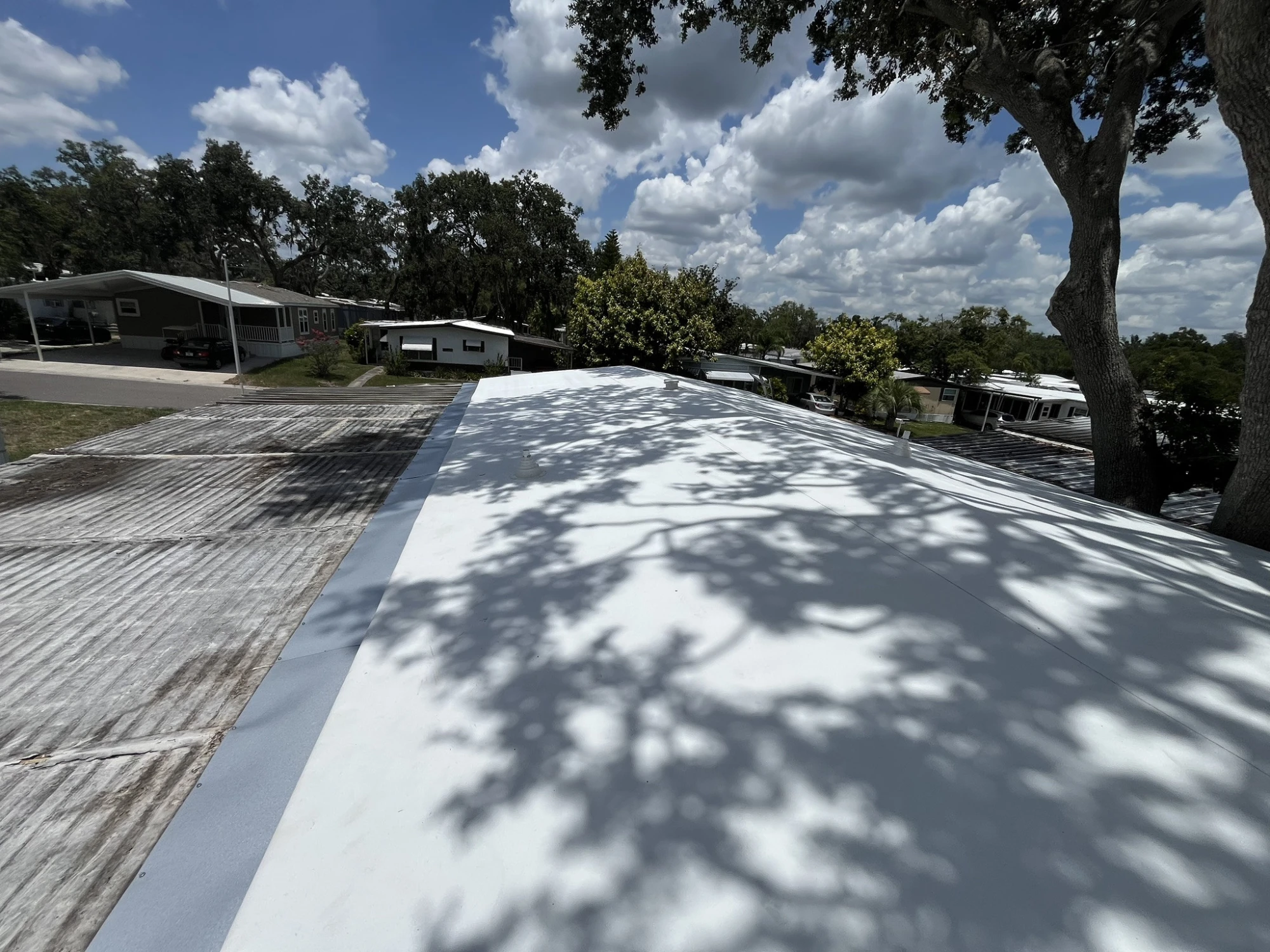
A built-up roof, often called a tar and gravel roof, is a flat roof made from alternating layers of asphalt and reinforcing felts or ply sheets, topped with gravel, a granule cap sheet or a reflective coating. R.I.G. Roofing installs and repairs built-up roofs, and replaces worn ones with modern membranes, for homes, porches, carports, additions and commercial buildings across Central Florida and the Gulf Coast, from Lakeland and Winter Haven to Tampa, Bradenton and Sarasota.
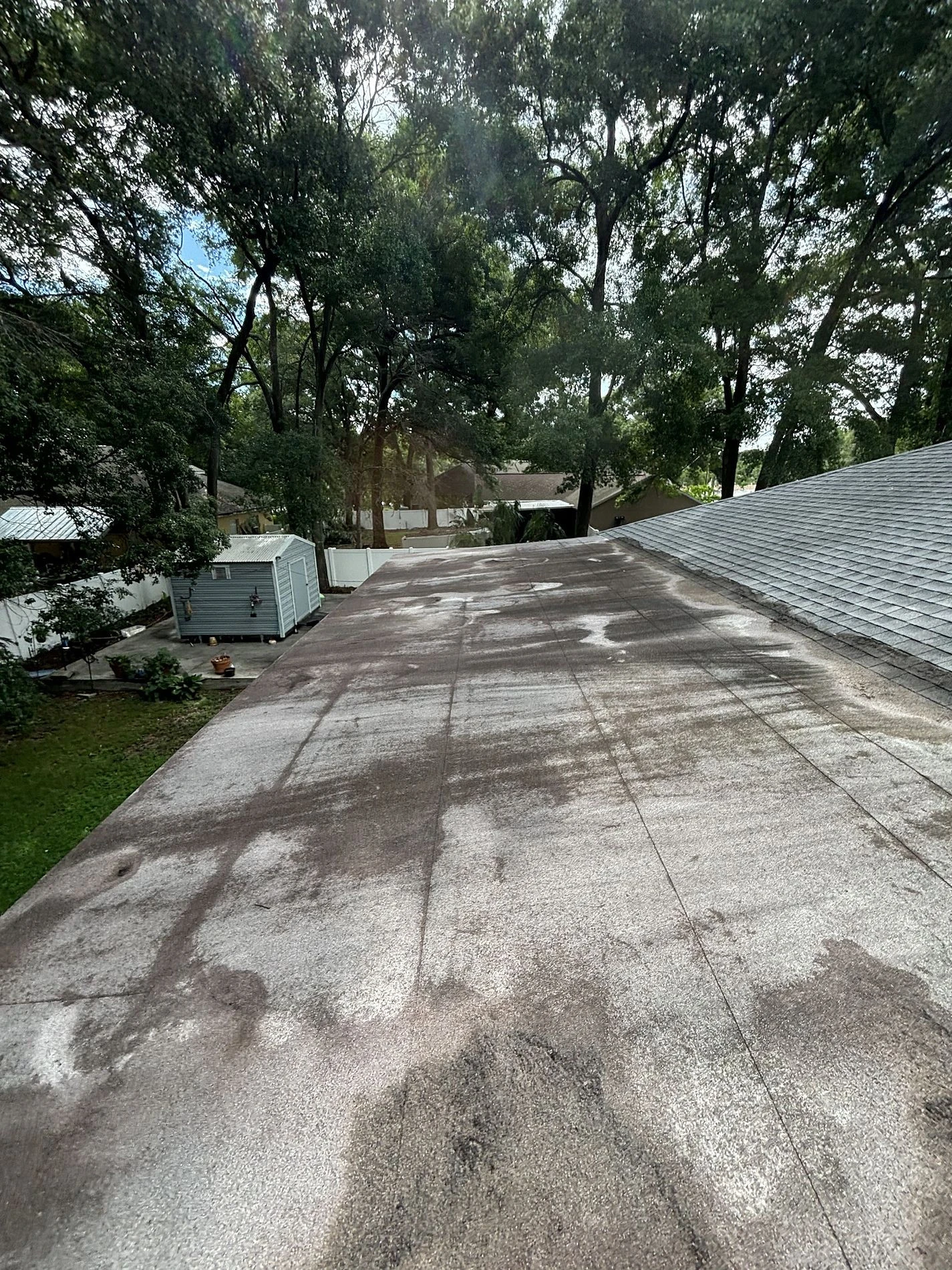
Built-up roofing is common on older commercial buildings, and you will also find it on flat sections of homes, porches and additions. Because it is made of many layers, it is tough and puncture resistant, but it is also heavy, and after years of sun and storms the asphalt dries out and the gravel wears away. When that happens, the question is usually whether a repair will hold or whether it is time to move to a newer membrane.
Our family owned team has worked on Florida roofs since 2005. We will give you an honest look at what your built-up roof needs, explain your options in plain language and never push a replacement you do not need. You can learn more about every option on our flat roofing systems page.
-
Family owned and faith based, serving Florida since 2005
-
Licensed: CBC1257644 / CCC1329175
-
BBB A+ rated and Google Guaranteed
-
10 to 20 year workmanship warranty
-
Free roof assessments and financing for qualified homeowners
Is Your Tar and Gravel Roof Showing Its Age?
Blisters, bare spots or standing water on your built-up roof? Schedule a free roof assessment and we will tell you honestly whether a repair will hold or a modern membrane makes more sense. Every job is backed by our 10 to 20 year workmanship warranty.
BUILT-UP ROOFING GUIDE
Built-Up Roofs in Florida: Plies, Warning Signs and Your Options
What is a built-up roof and how do the plies work?
A built-up roof is a stack of plies: layers of bitumen (asphalt) with reinforcing felts or ply sheets between them, finished with a protective top surface. Each ply adds another barrier, so water has to get through several layers before it reaches the deck.
On a traditional tar and gravel roof, the crew lays down hot asphalt, rolls out a felt, adds more asphalt and repeats until the roof has the number of plies the design calls for. The top layer is flooded with asphalt and covered with gravel, which shields the asphalt from direct sun and helps protect it from foot traffic and debris. Some built-up roofs use a granule surfaced cap sheet or a reflective coating instead of gravel.
Those many layers are the reason built-up roofs have a reputation for being tough. They are also the reason these roofs are heavy compared to single-ply membranes, which matters when it is time to repair, re-cover or replace.
Signs an older built-up roof is failing
The most common warning signs are blisters, bare spots where the gravel is gone, a cracked alligator pattern in the surface, and water that sits on the roof after rain. Any of these means the layers are wearing out and water may be finding its way in.
-
Blisters: raised bubbles where air or moisture is trapped between plies. A blister can split open and let water into the layers below.
-
Bare spots without gravel: wind, heavy rain and foot traffic move gravel around. Where the asphalt is exposed, the sun breaks it down much faster.
-
Alligatoring: a pattern of cracks that looks like alligator skin, caused by the asphalt drying out and shrinking in the heat.
-
Ponding: water that is still standing long after a storm, which puts constant pressure on seams and low spots.
-
Inside clues: ceiling stains, a musty smell or soft spots in ceilings under the flat section.
Please do not climb onto the roof to check. You can often spot trouble from the ground or from inside, and a free roof assessment from our team will tell you what is really going on up there.
Repair a built-up roof or replace it with a modern membrane?
If the damage is limited to a few spots and the layers underneath are still dry and sound, a repair is often the right call. If blisters, cracking and bare areas are spread across the roof, or water has soaked into the layers, replacing it with a modern membrane is usually the better long-term investment.
Repairs on a built-up roof typically involve cutting out damaged areas, patching with compatible materials and restoring the surface where gravel is missing. Our flat roof repair service covers leak tracing and targeted fixes like these. When the roof is past that point, roof replacement lets us remove the old layers, inspect the deck and install a newer system built for Florida conditions.
Because a built-up roof is heavy and often made of many layers, replacing one often means tearing off down to the decking. That gives us a chance to replace any rotted or damaged decking before the new roof goes on, instead of covering up a problem that will show up later.
How built-up roofing compares to other flat roof systems
Built-up roofing is tough and puncture resistant, but it is much heavier than single-ply membranes. Here is how it stacks up against the systems we install today.
-
TPO roofing: a white, reflective thermoplastic membrane with hot-air welded seams. Its light surface absorbs less heat than dark roofs, which helps in Florida sun.
-
PVC roofing: also a white thermoplastic membrane with welded seams, and it resists grease, oils and chemicals, which suits restaurants and buildings with exhaust vents. The TPO and PVC we install are Mule-Hide.
-
EPDM rubber roofing: a synthetic rubber membrane, usually black, with seams joined by tape or adhesive. The EPDM Roofing Association reports that EPDM membranes deliver at least 38 years of service life with proper design, installation and maintenance.
-
Modified bitumen roofing: the closest modern relative of built-up roofing. It is asphalt modified with APP or SBS and reinforced with polyester or fiberglass, installed in two or more plies, as Polyglass describes its modified bitumen membranes. It keeps the layered, asphalt based approach in a modern sheet form.
Pros and cons of built-up roofing in Florida
The biggest strengths of a built-up roof are its multiple layers and puncture resistance. The biggest drawbacks in Florida are its weight, the way dark asphalt breaks down under constant sun, and gravel that can wash or blow away in storms.
-
Pros: several layers of protection, good puncture resistance, and a familiar system on older commercial buildings.
-
Cons: heavy compared to single-ply membranes, gravel that can shift and leave bare spots, and dark exposed asphalt absorbs more heat than white reflective membranes.
Florida factors: ponding, heat, storms and rooftop equipment
Flat roofs in Florida have to handle standing water, intense heat and UV, summer storms and the foot traffic that comes with rooftop equipment. Planning for each of these is what keeps a flat roof watertight.
Ponding. According to the Florida Roofing and Sheet Metal Contractors Association, ponding is commonly defined as water remaining on the roof 48 hours after rain. The Florida Building Code points to a minimum design slope of 1/4 inch per foot (2 percent) for low-slope membrane roofs, and commercial manufacturer warranties typically require positive drainage or exclude damage caused by ponding. Older built-up roofs often have low spots, so we check drainage and slope whenever we replace one.
Heat and UV. Black surfaces absorb more heat than white reflective ones. Once the gravel thins out, the asphalt underneath takes the full force of the sun, which speeds up cracking and alligatoring.
Storms. Heavy rain and wind can scatter gravel and push water toward weak seams and flashing. A check after a big storm can catch small problems early.
Rooftop equipment. A/C units, vents and the service visits that come with them add foot traffic and penetrations. These spots need careful flashing on any flat roof, and our commercial roofing team plans for them on every job. Regular checkups through our roof maintenance program help keep any flat roof in shape between storms.
Last updated: October 2026
Built-Up Roof Repair and Replacement Services
Flat Roof Repair
We trace leaks on built-up roofs and fix blisters, cracks and bare spots where the gravel has worn away, so a sound roof can keep doing its job.
Flat Roof Replacement
When a tar and gravel roof is worn out, we tear off the old layers, check the decking and install a modern membrane built for Florida weather.
Compare Flat Roof Systems
See how built-up roofing compares to TPO, PVC, EPDM and modified bitumen before you decide on a replacement.
What Our Customers Say
Avg

Absolute 5-star experience from start to finish! We recently used R.I.G. Roofing for a project on our family home at Lake Mirror in Winter Haven after dealing with a frustrating roof leak. From the ve... - More
Absolute 5-star experience from start to finish!
We recently used R.I.G. Roofing for a project on our family home at Lake Mirror in Winter Haven after dealing with a frustrating roof leak. From the very beginning, their coordination was flawless. Their website was incredibly easy to navigate, and after filling out the contact form, we received an immediate response. Wow!The entire process was completely seamless. Every single step, from the initial consultation to the inspection with a higher-level manager, receiving the estimate, the actual roof work, and the follow-up care, was handled with total professionalism. It is clear that every department at R.I.G. works hand-in-hand.
- Hide

I am so pleased with RIG ROOFING! I didn't have any problems at all from start to finish. Emory McTeer was the person I met with to get the project started. Angelina kept me informed about everything... - More
I am so pleased with RIG ROOFING! I didn't have any problems at all from start to finish. Emory McTeer was the person I met with to get the project started. Angelina kept me informed about everything during the whole process. Aaron who supervised the job was very helpful and professional. The crew was very nice. Everyone involved exceeded my expectations! - Hide

The representative from the company was very professional and knowledgeable on how to repair our roof. The two repairmen followed the instructions while repairing the roof. 5 stars to this company
The representative from the company was very professional and knowledgeable on how to repair our roof. The two repairmen followed the instructions while repairing the roof. 5 stars to this company - Hide

RIG Roofing and Construction, solved my flat carport roof issues. Emory came out and thoroughly went over my whole roof and took lots of pictures. He listened to what I had to say and offered two opti... - More
RIG Roofing and Construction, solved my flat carport roof issues. Emory came out and thoroughly went over my whole roof and took lots of pictures. He listened to what I had to say and offered two options. The crew arrived early, managed by Isai and supervised by Aaron. Let me tell you they worked. This was a complex job and watching them was like watching a well organized group. They took down the flat part, built a temporary wall to hold the exterior structure up. They replaced the structural beam, by building it in place. Attached the cross beams and replaced the plywood. Then added the ISO board to create a slight tilt, so the water would flow off the roof. Then covered it with TPO sheeting. All this in one day and it poured for an hour or so. I was impressed. Thank you so much for the work well done. - Hide

I cannot say enough great things about Aaron Chandler and RIG Roofing! Aaron's communication throughout the entire process was exceptional. He was responsive at all hours of the day and understood how... - More
I cannot say enough great things about Aaron Chandler and RIG Roofing! Aaron's communication throughout the entire process was exceptional. He was responsive at all hours of the day and understood how important our timeline was. We needed a complete reroof finished in time to satisfy insurance requirements, bind coverage, and keep our real estate closing on schedule with no delays.
RIG Roofing delivered! The entire reroof was completed in just one day, and I was extremely impressed with the quality, efficiency, and professionalism of the crew. Even the neighbors commented on how amazed they were with the process and quality of the work.
What impressed me just as much was the attention to detail. The landscaping and exterior of the home were kept in meticulous condition throughout the project, everything was cleaned up beautifully, and they even left spare shingles for the homeowners should they ever need them in the future.
- Hide

The only company I will call for any roofing work.
The only company I will call for any roofing work. - Hide
Built-Up Roofing FAQs
A built-up roof, often called a tar and gravel roof, is a flat roof made from alternating layers (plies) of asphalt and reinforcing felts or ply sheets. It is finished with gravel, a granule cap sheet or a reflective coating. R.I.G. Roofing repairs and replaces built-up roofs across Central Florida and the Gulf Coast.
Common signs are blisters, bare spots where the gravel is gone, a cracked alligator pattern in the surface, water that is still standing long after rain, and ceiling stains under the flat section. Please do not climb up to check. Call R.I.G. Roofing at (863) 294-4477 for a free roof assessment.
If the damage is limited to a few spots and the layers underneath are dry and sound, a repair often makes sense. If blisters, cracking and bare areas are spread across the roof, or water has soaked into the layers, replacing it with a modern membrane such as TPO, PVC, EPDM or modified bitumen is usually the better investment.
Yes. Because it is made of many layers of asphalt and felt, and often topped with gravel, a built-up roof is heavy compared to single-ply membranes. Replacing one often means tearing off down to the decking, which lets us replace any rotted or damaged decking before the new roof goes on.
The Florida Roofing and Sheet Metal Contractors Association says ponding is commonly defined as water remaining on the roof 48 hours after rain. The Florida Building Code points to a minimum design slope of 1/4 inch per foot for low-slope membrane roofs, and many commercial manufacturer warranties exclude damage caused by ponding.
Yes. R.I.G. Roofing backs its work with a 10 to 20 year workmanship warranty, offers free roof assessments and has financing for qualified homeowners. We are licensed (CBC1257644 / CCC1329175), BBB A+ rated and Google Guaranteed.
Ready to Replace Your Built-Up Roof?
Whether your tar and gravel roof needs a targeted repair or a full tear-off and a new membrane, R.I.G. Roofing starts with a free roof assessment and stands behind the work with a 10 to 20 year workmanship warranty. Call (863) 294-4477 today.