When replacing a roof in Florida, homeowners often focus on materials like shingles or metal. However, the shape of your roof plays an important role in storm performance, drainage, maintenance, and long-term durability too.
Flat roofs and pitched roofs each have advantages and disadvantages, especially in Florida's storm-prone climate. Whether you own a modern home, historic property, mobile home, or coastal residence, understanding the differences can help you make a smarter roofing decision.
This article is part of our Roofing for Specific Needs series, where we address roofing challenges unique to Florida homes.
Flat Roofs vs. Pitched Roofs - What you need to know
What Is a Flat Roof?
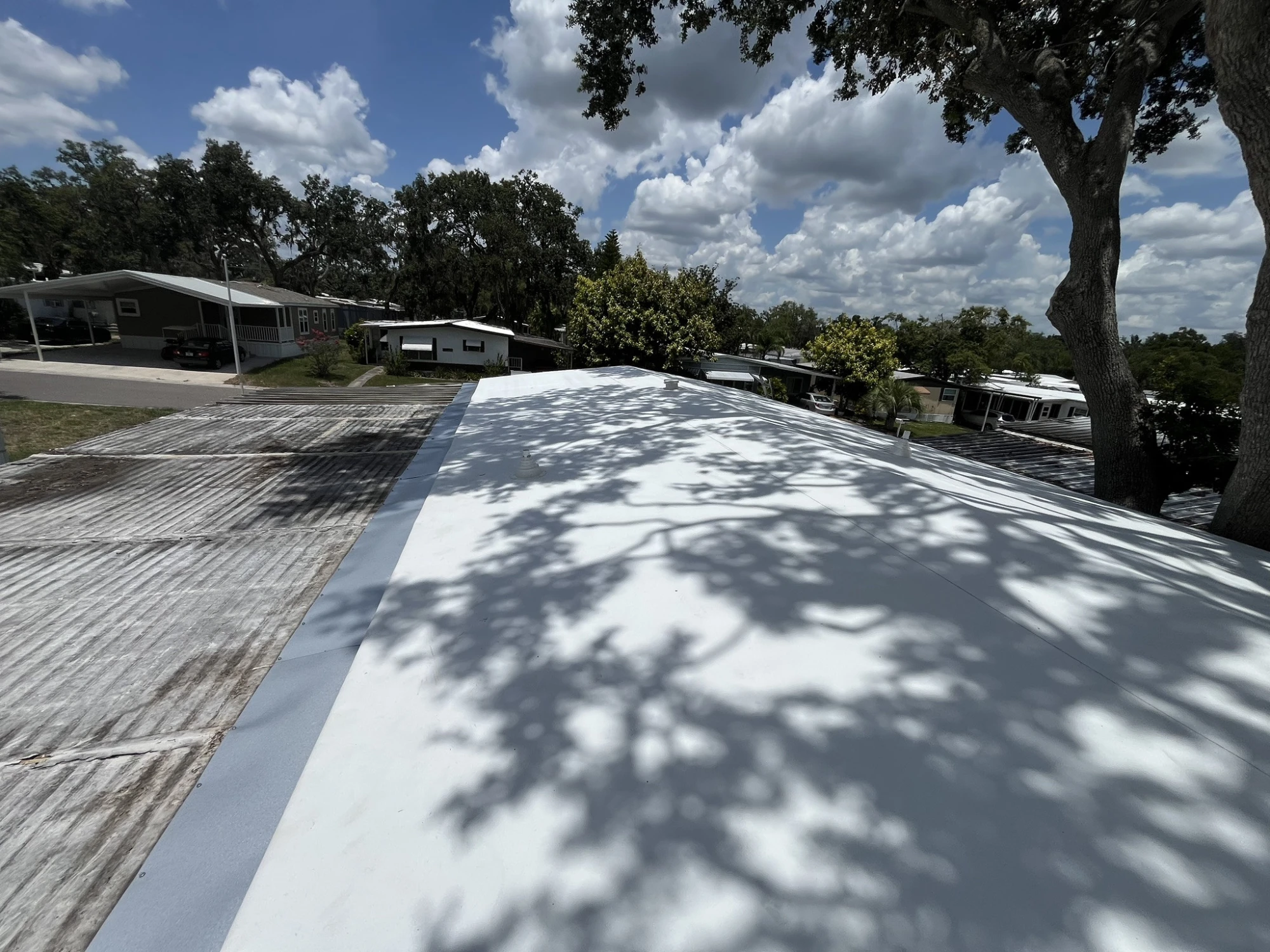
Don't let the name fool you, a flat roof is not completely flat. It actually has a slight slope that helps rainwater drain. From the ground, though, it creates a clean, horizontal look that makes modern homes stand out.
Flat roofs are common on:
- Modern homes
- Commercial buildings
- Additions
- Garages
- Mobile homes
- Sunrooms and screen rooms
What Is a Pitched Roof?
A pitched roof is know for the classic angles and peaks that give a home its character. Its sloped design helps rainwater flow off the roof faster and more efficiently. A great advantage during Florida's heavy downpours.
Pitched roofs are common on:
- Traditional single-family homes
- Historic buildings
- Single use business buildings
- Newer modular homes
How Florida's Climate Impacts Roof Design
Florida roofs have tough jobs! From heavy downpours and hurricane-force winds to relentless humidity and intense sunshine, they face a challenge in every season. Your roof's shape plays an important role in how it sheds rainwater and handles wind, making it about much more than curb appeal.
Flat Roof Pros and Cons
Pros of Flat Roofs
- Potentially Lower Installation Costs - A simpler roof design can mean less framing and fewer materials, helping keep installation costs manageable. Your final price still depends on the roofing system and your home's condition.
- Easier Access for Maintenance - Fewer steep slopes give roofing professionals easier access for inspections and repairs, making routine upkeep a little more straightforward.
- A Great Match for Modern Homes - Love clean lines and a contemporary look? Flat roofs complement modern architecture and give your home a distinctive profile.
- Space That Works for You - A properly designed flat roof can accommodate HVAC equipment or solar panels, putting that rooftop space to practical use. Of course, structural support and installation details matter for mixed use applications.
- Lightweight, Reflective Options - Flat roof systems like TPO offer lightweight protection with reflective options that help reduce heat absorption, a welcome benefit under Florida's blazing sun.
For mobile or modular homes, explore Roofing Solutions for Mobile and Modular Homes.
Cons of Flat Roofs
- Drainage Needs Extra Attention - Florida downpours put your flat roof drainage to the test. Flat roofs rely on carefully designed slopes and clear drains to move water and prevent pooling and roof damage.
- Standing Water Can Equal Trouble - When water does not drain properly, damaged seams, flashing, or punctures can become entry points for leaks.
- More Frequent Checkups - Between intense sunshine and powerful storms, Florida gives flat roofing membranes a workout. Regular roof maintenance helps spot damage before it turns into an expensive surprise.
- Lifespan Varies - Some low-slope roofing systems may need replacement sooner than metal or tile roofs. Material quality, installation, drainage, and maintenance all help determine how long yours lasts.
Pitched Roofs - Pros and Cons
Pros of Pitched Roofs
1. Superior Drainage
Water runs off quickly, reducing standing water risk.
2. Better Long-Term Durability
Many pitched roof systems last decades longer.
3. Stronger Hurricane Performance (When Properly Installed)
Wind flows over sloped surfaces more efficiently.
4. Greater Material Variety
Shingles, tile, metal, and stone coated steel are all compatible.
For coastal considerations, read: The Best Roof Types for Coastal Florida Homes
Cons of Pitched Roofs
1. Higher Installation Cost
More framing and materials are required.
2. More Complex Repairs
Steep slopes require safety precautions.
3. Increased Wind Uplift Risk If Installed Poorly
Improper fastening can allow wind to lift shingles.
For storm prevention tips, see: How to Protect Your Roof from High Winds and Hurricanes
Storm Performance Comparison - Flat Roofs vs. Pitched Roofs
Storm Performance Comparison - Flat Roofs vs. Pitched Roofs
When a hurricane hits, your roof needs to handle both powerful winds and relentless rain. Pitched roofs generally shed water more readily, but that does not automatically offer better hurricane protection. Both designs depend on secure attachments, sound construction, and proper installation.
Flat Roofs in Hurricanes
Flat roofs can provide strong storm protection, but a few details deserve extra attention:
- Edges and corners are vulnerable to uplift. Strong winds can pull roofing materials upward. Secure perimeter flashing and properly attached roofing help prevent damage from spreading across the roof.
- Seams and attachments play different roles. Properly sealed membrane seams help keep rain out, while the membrane's attachment to the underlying roof helps resist wind uplift. Both must be installed correctly.
- Drainage must be able to keep up with heavy rain. Flat roofs need a slight slope and clear drainage paths. Blocked drains can allow water to accumulate, adding weight and increasing the chance of leaks through damaged areas.
Pitched Roofs in Hurricanes
A pitched roof helps move rainwater away more efficiently, but high winds can still be a problem:
- Wind can lift roofing and decking. This is why edges, overhangs, and ridge areas need proper fastening. Wind blowing over a peak can create suction rather than simply gliding past.
- The entire structure needs secure connections. Shingles, panels, or tiles must be attached correctly, but protection also depends on the decking's attachment and the connections between the roof framing and walls.
- Material ratings are only part of the picture. A roofing product's wind rating does not guarantee the whole roof will withstand that wind speed. Installation details, roof geometry, and the home's exposure all affect performance.
Which Roof Performs Better?
Neither roof shape wins every hurricane comparison. Pitched roofs offer a drainage advantage, while well-designed flat roofs can also perform well in severe weather. For either type, the strongest approach combines a roofing system designed for the home's wind exposure, secure structural connections, dependable drainage, and regular maintenance.
Energy Efficiency Comparison
Flat Roofs
- White TPO membranes reflect sunlight
- Lower attic heat buildup
- Ideal for solar panel installation
Pitched Roofs
- Metal roofs reflect heat
- Attic ventilation improves cooling efficiency
- Greater airflow potential
Both systems can be energy-efficient when installed correctly.
Maintenance Differences
Flat Roof Maintenance
- Inspect drains regularly
- Remove debris
- Check seams
- Monitor pooling areas
Pitched Roof Maintenance
- Check shingles or panels
- Inspect flashing
- Clean gutters
Flat roofs require more frequent monitoring, while pitched roofs benefit from natural drainage.
Which Roof Is Better for Florida Homes?
There is no one-size-fits-all answer. It depends on:
- Home design
- Structural support
- Budget
- Hurricane risk
- Coastal exposure
- Long-term plans
If preserving a historic home, see: Roofing for Historic Homes: Challenges and Solutions
When to Consider Switching Roof Types
Sometimes homeowners consider converting from flat to pitched or vice versa.
Reasons may include:
- Persistent drainage problems
- Severe storm damage
- Modernizing home appearance
- Insurance requirements
- Structural renovations
A professional inspection is required before any structural conversion.
Why Professional Installation Matters
Regardless of roof type, installation quality determines storm performance.
Florida roofing must follow:
- Strict fastening patterns
- Updated underlayment standards
- Code-compliant materials
- Hurricane reinforcement practices
Improper installation can lead to catastrophic storm damage.
Why Florida Homeowners Trust R.I.G. Roofing
R.I.G. Roofing provides:
- Free inspections
- Flat and pitched roof expertise
- Code-compliant installations
- Hurricane-resistant material options
- Honest, no-pressure recommendations
We never sell a roof you don't need and always prioritize long-term protection.
Call to Action
Whether you have a flat roof, pitched roof, or are considering a change, our experts can help you determine the best solution for your Florida home.
Free estimate at RIGroofing.com 📲 (863) 294-4477
Internal Links - Roofing for Specific Needs Series
This article is part of our Roofing for Specific Needs pillar. Explore:
- Roofing Solutions for Mobile and Modular Homes
- How to Protect Your Roof from High Winds and Hurricanes
- The Best Roof Types for Coastal Florida Homes
- Roofing for Historic Homes: Challenges and Solutions
Return to the main pillar page: Roofing for Specific Needs - Complete Guide